
Mikati condemns Israeli aggression in South Lebanon, calls for international intervention

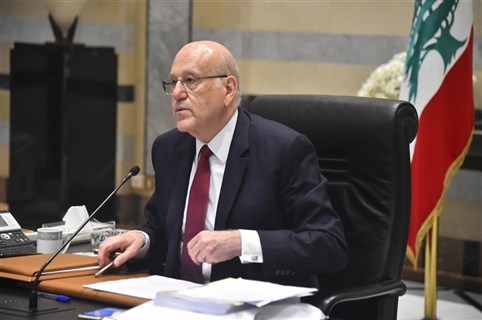
NNA – Caretaker Prime Minister, Najib Mikati, on Friday began the cabinet session with a strong condemnation of ongoing Israeli attacks on South Lebanon. He emphasized that these deliberate killings, destruction of towns, and burning of crops are not only condemnable, but also constitute a destructive and terrorist aggression that the international community must halt. Mikati reiterated Lebanon's commitment to fully implementing UN Resolution 1701.

The PM then expressed gratitude to friendly nations for their efforts to halt Israeli aggression and welcomed UN Security Council Resolution 2732, which outlines a roadmap to cease the fighting in Gaza. He urged for its swift implementation to prevent a broader regional conflict.

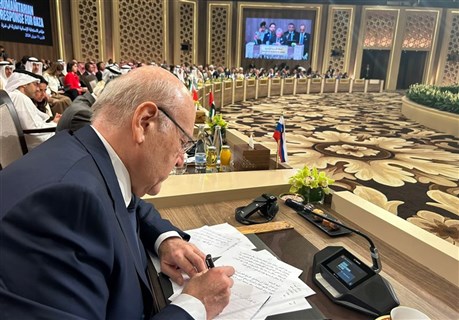
This week, Mikati attended the "Emergency Humanitarian Response in Gaza" conference in Jordan, where Lebanon's presence and stance were reinforced. He emphasized the need for continued support for Lebanon and pressure on Israel. The conference laid the groundwork for another event to launch a support campaign for Gaza and affected areas.

Mikati further highlighted the prolonged vacancy in Lebanon's presidency, urging all parties to engage in dialogue to elect a new president and restore stability to the country's institutions. He welcomed and appreciated all initiatives towards this goal.

The Prime Minister also acknowledged the Internal Security Forces on their anniversary, thanking the UAE for its support and commending Qatar for its continuous efforts to enhance the capabilities of the Lebanese Army.

He celebrated the recognition of the Lebanese University by QS Rankings for 2025 as the top institution in Lebanon for its professional and academic reputation.

Mikati went on to address the proposal from the Ministry of Economy and Trade regarding Qatar Electricity's offer. He detailed the steps taken to negotiate the development of 100 MW of solar power in two locations, highlighting the need for legal and contractual clarity. He noted that TotalEnergies had withdrawn from acquiring existing licenses and emphasized the necessity of a legal framework for a 25-year Power Purchase Agreement.

Looking ahead to the summer tourism season, Mikati praised the efforts of the Minister of Tourism and expressed hope for a successful season that would bolster Lebanon's status on the global tourism map, welcoming both Lebanese expatriates and Arab visitors.

Mikati concluded by reaffirming his respect for the judiciary amid recent political debates, clarifying the government's position on legal matters related to old rent laws and teachers. He extended his best wishes to all the Lebanese for a peaceful and blessed Eid al-Adha.

Mikati at “Urgent Humanitarian Response for Gaza” conference in Jordan: Our south and its people are in a real catastrophe

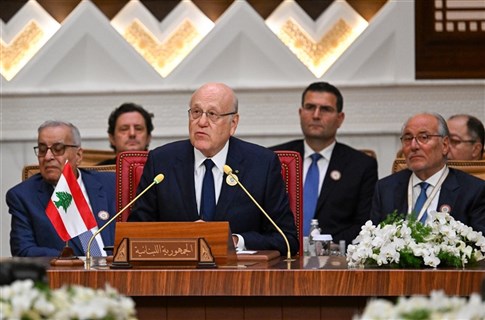
NNA - Caretaker Prime Minister, Najib Mikati, on Tuesday delivered a word at the  ‘Urgent Humanitarian Response for Gaza’ Conference, held at the King Hussein Bin Talal Convention Center in the Dead Sea, Jordan, saying, “We are meeting today to support the people of Gaza in the face of the Israeli aggression. I am coming today from a homeland that is suffering the repercussions of this war on its land, including killing, displacement and destruction."

“The approach of destruction followed by Israel is unprecedented in history, and we experience it daily in Lebanon on the land of our precious south, which has been drenched with the blood of the martyrs and the wounded and has become a land scorched by the lava of crimality, as a repercussion  to the destructive plan in Gaza and a continuation of it,” Premier Mikati said.

“From this platform, we call on the countries of the world to intervene with all force to stop what is happening after 75 years of ignoring the rights of the Palestinians, in the hope that Security Council Resolution No. 2735 that was issued yesterday, which we welcome in the name of the Lebanese state, will be the first step, even if modest, towards stability, in order to reach the desired peace through the Palestinians gaining their right to their independent state. All else are mere projects that will not succeed, and cannot be imposed by the force of reality or the reality of force,” Mikati added.

“Lebanon is accustomed to feeling the Arab pain and carrying the issues of the Arabs because they are its people and family and it has paid a heavy price in terms of the lives of its people and its infrastructure. Today, Lebanon is ready to provide relief to the injured in Gaza, especially children, in its hospitals and to support them as an expression of its solidarity with them, in addition to helping to equip and rehabilitate medical cadres to compensate for Israel’s killing of hundreds of health sector workers.”

“We are also ready to cooperate with the Palestinian Authority to complete the necessary administrative arrangements to facilitate the crossing of the wounded for treatment and then return safely to their country quickly.”

Mikati continued: “You, beloved ones, can imagine the extent of the damage occurring in Lebanon as a result of the ongoing aggression since the eighth of last October. The damage is enormous in educational facilities, health, developmental and agricultural facilities, as well as in livestock and agricultural wealth.”

The PM concluded: “Our south and its people, are in a real and indescribable catastrophe, and the ongoing aggression is continuing to systematically kill, destroy and burn, turning southern Lebanon into a barren and scorched land. Therefore, I am presenting this matter to you so that you can be, as you have always been, standing by your second country, Lebanon, and I am confident that you will not fall short in that... of stretching a helping hand and assisting and repairing the damage, and helping and supporting people in reconstruction and steadfastness... because the symbolic Lebanon will remain an important country for you, no matter how severe the crises are.”

Mikati from parliament: EU aid to Lebanon unconditional

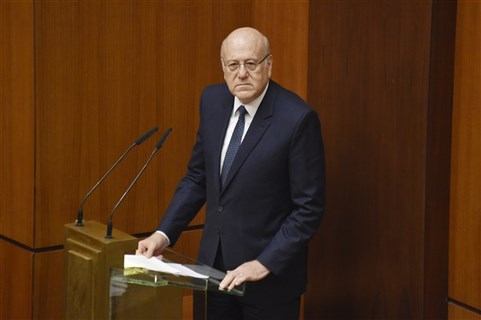
NNA - Caretaker Prime Minister Najib Mikati explained Wednesday to the parliament that the fresh aid package offered to Lebanon by the European Union is unconditioned, and that no agreement has been signed in that respect.

"I confirm that the aid is not conditioned by any prior or subsequent condition, and no agreement has been inked with the European Union regarding it," Mikati told a parliament session devoted to discussing the aid and the displaced Syrians' file.

Mikati stressed the necessity of full accord between the Lebanese to resolve the Syria displacement issue.

"The European aid announced by European Commission President Ursula von der Leyen in the presence of the Cypriot President is a confirmation of the periodic aid the European Commission has been providing to Lebanon for years," Mikati said.

"This European support is devoted to the basic services offered by the Commission to the governmental institutions in the fields of social protection, education, water and healthcare," he explained.

"The President of the European Commission has promised a re-evaluation of this aid every six months in light of Lebanon's need. She also promised doubled amounts and European investments in Lebanon once the required reform laws are approved," he added.

"We insisted that this aid be aimed at encouraging the Syrian displaced to return to their country and not to stay in Lebanon," he said.

"The government has never failed to make the suitable decision regarding the displaced file, and the army and security apparatuses are assuming their duties to curb the unjustified displacement which is threatening the independence of our entity," he underlined.

"What is needed today is a unified national position away from outbidding and accusations," he concluded.

1 Photos
Print


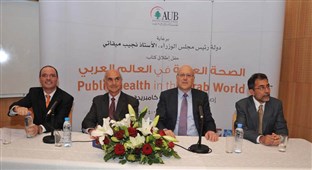
Under patronage of PM Mikati: AUB launches milestone reference book on public health in Lebanon and region
Tuesday, May 15, 2012

Under the patronage of Prime Minister Najib Mikati, the Faculty of Health Sciences (FHS) at the American University of Beirut (AUB) launched a milestone reference book on public health in Lebanon and the region.


Titled “Public Health in the Arab World” (Cambridge University Press, March 2012) the 500-page book is the largest volume of its kind in the history of public health literature in the region. In its English edition, the book has already generated great interest at the global level especially at a time when the Arab World is at the center of international attention. It is currently being translated into Arabic by the WHO, and the Arabic issue is expected to be released by the end of the year.


The book editors are: Samer Jabbour, Rita Giacaman from Birzeit University, Marwan Khawaja from ESCWA (formerly at AUB FHS), Iman Nuwayhid and the associate editor is Rouham Yamout from WHO (formerly at AUB FHS).


The book launch ceremony took place at the Hisham Jaroudi Auditorium at the AUB Rafic Hariri Nursing School in the presence of PM Mikati and a host of academics and members of international organizations.


Mikati gave his full endorsement of the book, calling it a “massive accomplishment that fills major information gaps in public health.” “When I was invited to patron the event,” he noted, “I did not hesitate for a moment. Why? Because the event is at AUB, and this institution has taught us a lot and we owe it a lot. It taught us values, tolerance and respect for others and most importantly, that religion is for all but is a private matter.”


He added: “And if I can give it [the book] a boost in any way, I wouldn’t hesitate for a minute, especially since, of the 80 or so contributors, 26 are Lebanese and that gives us great pride.”


Mikati also noted that the section on the effect of violence and wars on public health caught his attention, and he urged everyone to study it and learn from it. He also offered his support for any new editions the University is planning to release.


Besides PM Mikati, speakers at the ceremony included AUB President Peter Dorman, Health Sciences Dean Iman Nuwayhid and lead editor of the book Samer Jabbour, a senior lecturer at AUB. Professor Hoda Zurayk was master of ceremony.


“Public Health in the Arab World is a prime example of what we, at AUB, want to be doing and, indeed, what we do best in terms of producing research that speaks to the challenges of the region and attempts to address realizable solutions,” said AUB President Peter Dorman. “With over 500 pages and 38 chapters, this is the largest volume of its kind in the history of public health in the region and certainly the most ambitious effort to be led by a university in Lebanon.”


FHS Dean Iman Nuwayhid noted that the faculty took on this project because “this is part of our mission… to make an impact through our scientific research, our network of connections with sister institutions and our wide-ranging contacts among local communities and decision-makers to improve the state of public health in our region. We base our mission on our commitment to health as a human right and a humanitarian concept grounded in social justice.”


Nuwayhid also underscored the importance of AUB’s support for the project.


The book is divided into seven sections which address the context of public health; social determinants of health; infectious and non-infectious diseases; the health of certain vulnerable groups, such as women, the elderly, migrants and children; health in the context of war and violence; health systems and health care delivery; and health and the social agenda.

Lead editor Samer Jabbour, a senior lecturer at FHS, said, “The book is a massive collaboration, a common vision, and an ongoing dialogue among over 80 experts from public health and other fields.”


He added: “Before this book, researchers and policy-makers would focus their energies on studying the politics, economy, or sociology of the region, without looking into health concerns. But the recent Arab uprisings have shown that a lot of the causes of youth disenfranchisement stems from the unemployment, marginalization, and the absence of social justice. What we have shown through this book is that studying the health of a population can reveal these issues, and finding solutions to health problems can contribute to a more global solution.”


All royalties from the sale of the book will go to purchase copies to be distributed for free to students and institutions of public health in the Arab World.


more videos
حديث الرئيس نجيب ميقاتي إلى قناة الجديد